
Text & voice conversation
Conversational reflection through supported text or voice modes.
LIVA is a conversational AI designed to listen before it guides—helping you reflect, notice possible patterns and practise manageable wellbeing actions without pretending to be a therapist.
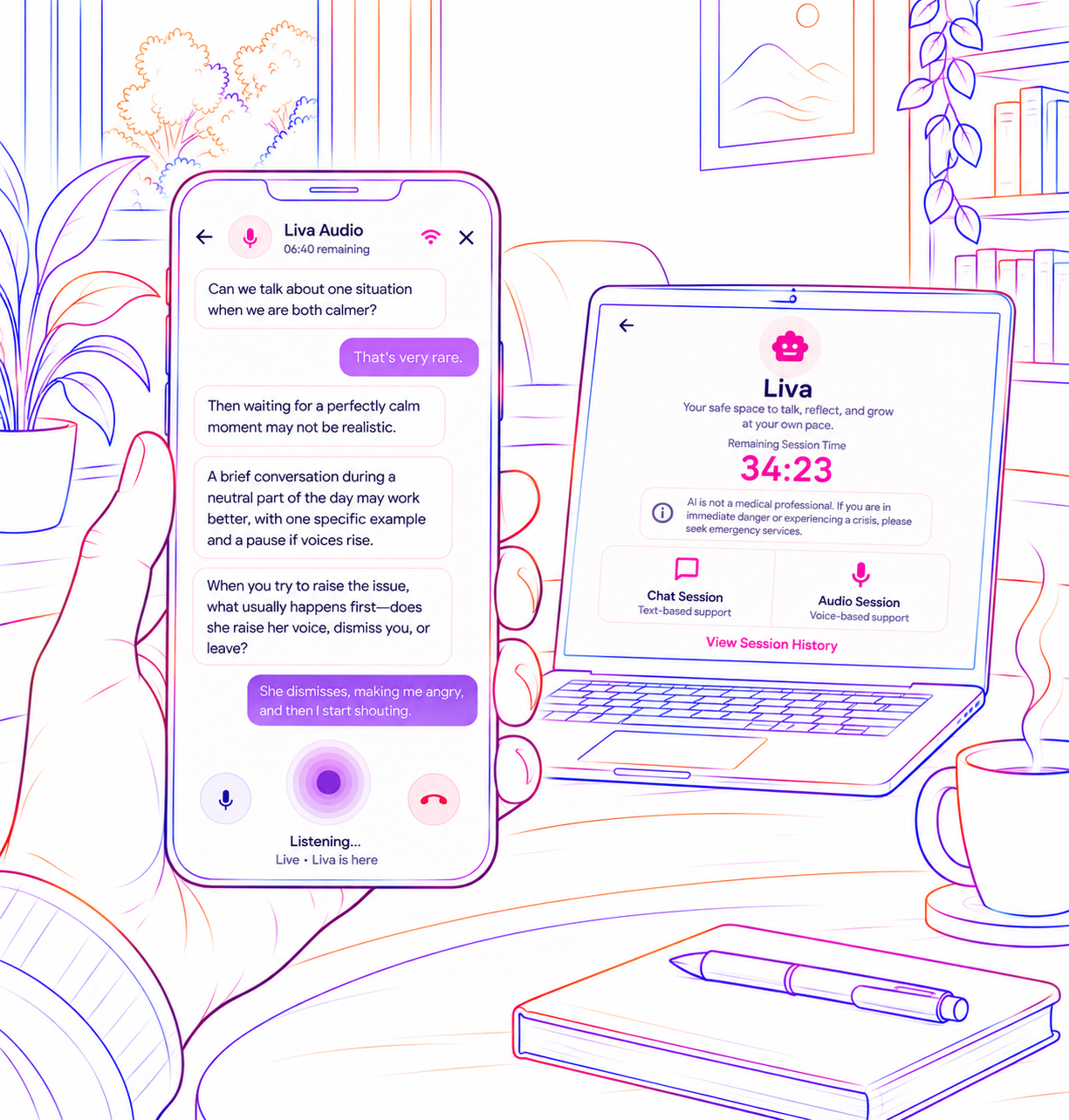
Mjuzi is designed as a guided conversation, not a rapid-fire assessment. It follows your concern, asks one primary question at a time and keeps deeper exploration permission-led.
Start with your words and your pace.
Mirror what was shared without adding hidden meaning.
Ask one relevant question and invite correction.
Offer one approved low-risk tool when useful and wanted.
Check what helped, note what remains, then close or connect onward.
Safety and boundaries come first. Crisis, safeguarding, medical urgency, requests for human support and prohibited clinical requests override the ordinary conversational flow.
The experience groups common needs into a smaller set of clear capabilities.
Conversational reflection through supported text or voice modes.
Supportive acknowledgement, clarification and gentle pattern exploration.
Short check-ins and approved prior context can help a returning conversation start with less repetition.
Approved options such as breathing, grounding, reflection or journaling where eligibility and consent allow.
Small suggestions informed by the current conversation and permitted wellness context.
Clear routing toward psychologists, psychiatrists or other appropriate support when AI should not decide alone.
The distinction is deliberate: immediacy and reflection can be supported by AI; diagnosis and consequential clinical decisions stay with qualified professionals.
Returning sessions are designed to use the smallest relevant amount of approved context rather than replaying your history or turning AI guesses into facts.
Approved summaries, goals, preferences and tools you have tried may be used when relevant and permitted.
AI hypotheses, inferred motives, personality labels and theory-derived conclusions are not meant to become ordinary long-term memory.
If something has changed, your current account should take precedence over stale context. Disputed information should not be treated as settled fact.
Eligible information can be corrected or excluded, and revoking an optional consent should stop future use within that scope.
Where the post-session report workflow is enabled, Mente Mirror is designed to keep three information layers distinct so an AI-generated interpretation does not silently become a client fact.
What you actually shared: chronology, context, strengths, goals and selected exact wording, with missing information left as missing.
Grounded first · reviewed before approved longitudinal useTentative psychological hypotheses remain separate from facts, include uncertainty and are restricted to authorised clinical review.
AI draft is tentative · formal diagnosis stays human-controlledA concise summary can include important themes, strengths, approved tools, reflective questions and next steps.
Human approval before release where this workflow appliesPrivate clinical material stays private. Clinician-only notes, hidden hypotheses and detailed safety records are not intended to appear in an ordinary client-facing report or conversational memory.